How it all fits together
The Loca.fi portal manages inventory by connecting four types of building blocks. Understanding how they relate to each other makes every other part of the portal easier to use.
The four building blocks
Templates are reusable definitions that shape an entity type. A template decides what custom fields an entity of that type carries (called extended properties). Template types in the portal are: Item, Place, Person, and Collection.
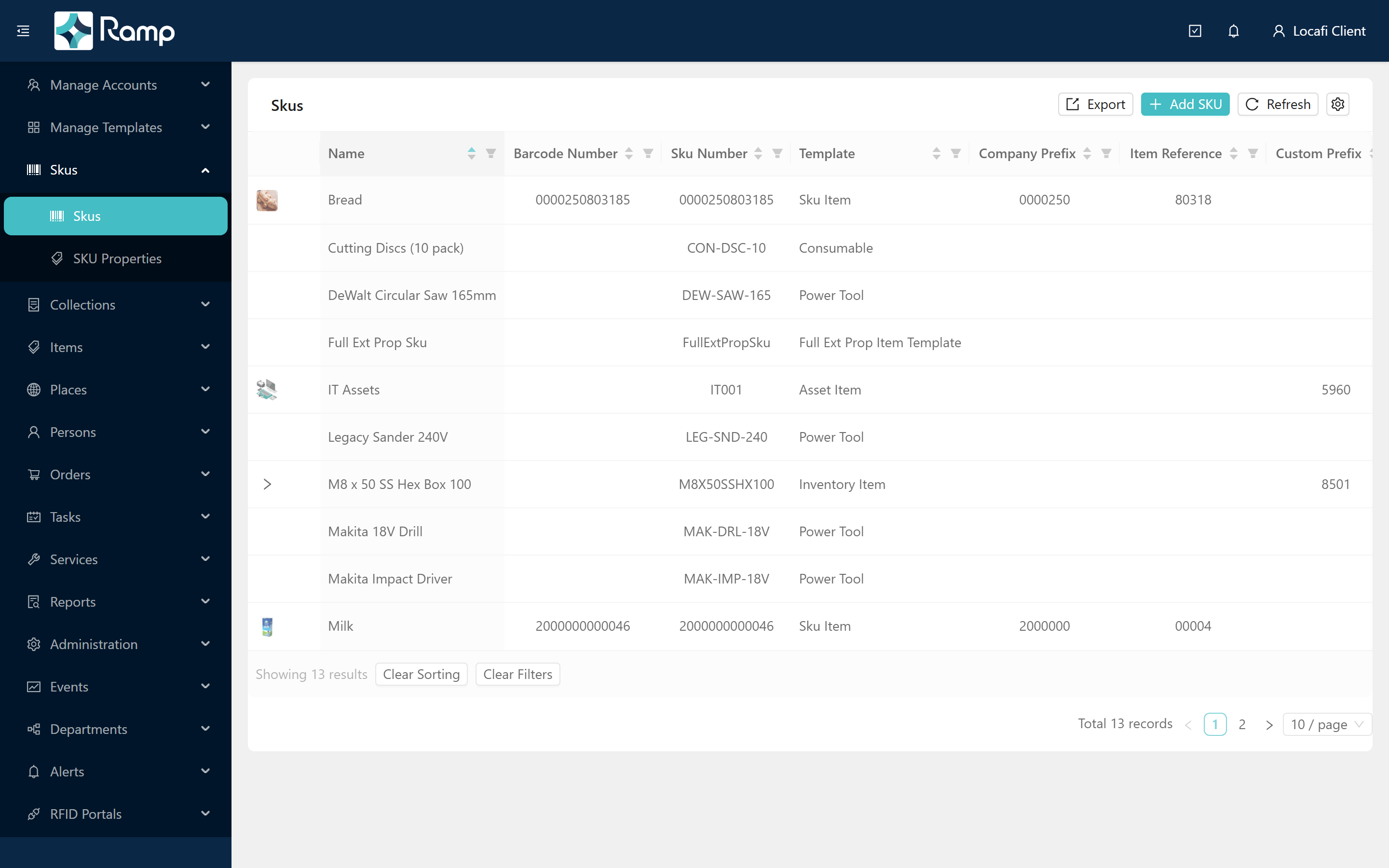
SKUs are product definitions in your catalogue. A SKU describes a product type — "Makita 18V Drill" — including its classification fields and any custom properties defined by its Item Template. Every SKU requires an Item Template. A SKU must not be in Draft or Discontinued state before items can be created against it (newly created SKUs start in Draft — activate them first).
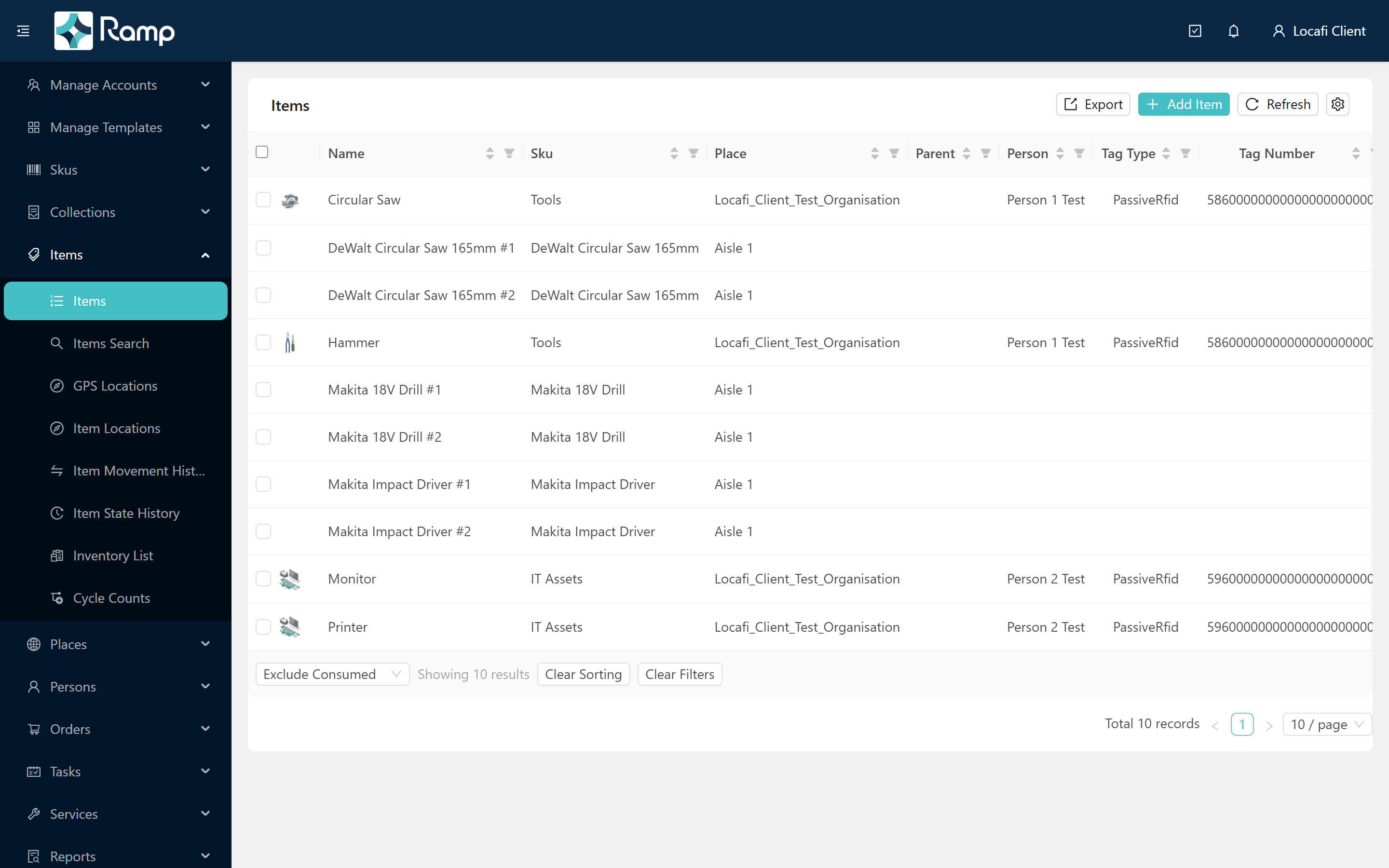
Items are the physical, usually RFID-tagged, instances of a SKU. Creating an item requires both a SKU (what it is) and a Place (where it is right now). An item always sits at exactly one place at any given moment.
Places form a location tree. Every place has a parent except the root, and every place requires a Place Template. Items move through this tree as they are received, stored, moved, and dispatched.
How they connect
The chain in one sentence: templates shape SKUs and places → SKUs define products → items are the physical copies → places are where they live.
Orders move items between places. Stocktakes verify what is really there. See Orders at a glance for a full overview of order types, and Stocktakes for the upcoming stocktake feature.
What it looks like in the portal
The SKU list is your product catalogue. Each row is one product definition:
The Items list shows physical instances. The SKU and Place columns tell you what each item is and where it is right now:
Explore each concept
- Templates & extended properties
- SKUs & the product catalogue
- Items & item states
- Places & the hierarchy
- Orders at a glance
For the REST API reference that underpins these concepts, see the API Documentation.